
Daniel Anderson
11/04/2019
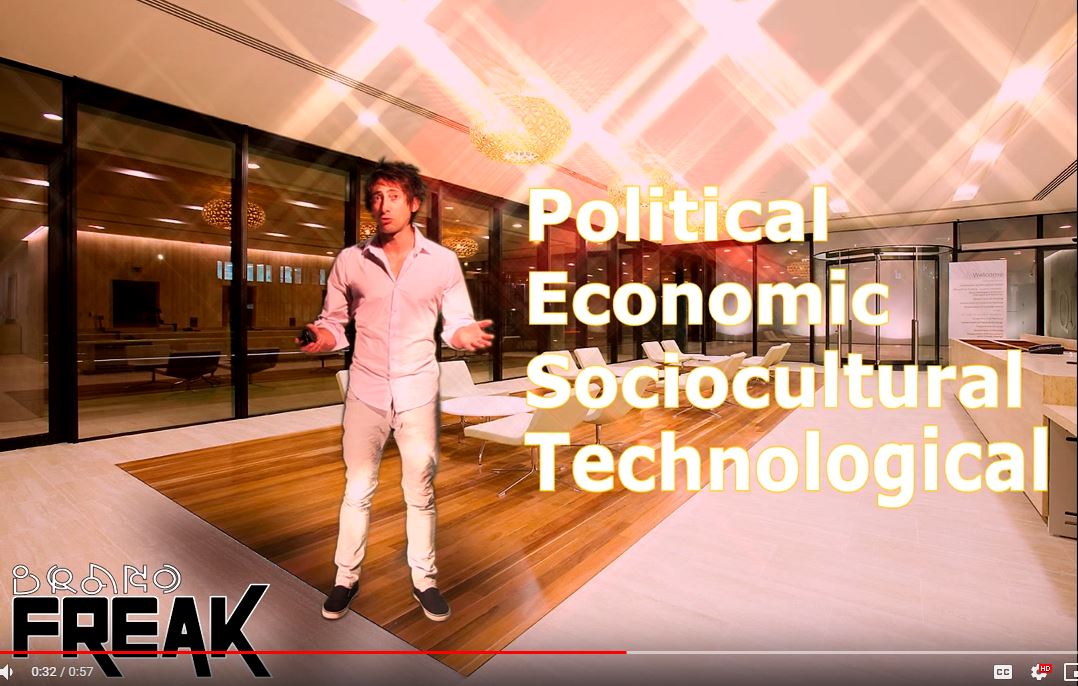
When helping SME’s I often suggest a regular PEST Analysis to help discover, evaluate, organise, and track macro-economic factors which can impact on their business now and in the future… I personally find a PEST Analysis helpful when comprehending market situations which need to be broken down in order to discover opportunities…
Situation: As the RBNZ hints at a possible OCR cut, in an effort to hold inflation in the 1-3% sweet-spot, I’ve found myself wondering why? How is inflation remaining so low in a time of sustained record low interest rates? A time when business should be booming! After a very brief PEST analysis, I found the answer is probably technology.
Politically: Locally, government spending is up, which traditionally acts as an economic stimulus. Leadership is settled, allowing for strategic planning. International political tension is increasing and reducing foreign trade which will be restricting local growth and importation of goods, which should have a demand-pull effect and increase inflation.
Economically: The NZ economy grew by a respectable 2.7% in 2018, this remains positive, with a 3% average increase forecast. The primary sector is facing some major challenges but our increasingly diverse economy seems to be providing a sufficient buffer. All good news for inflation.
Social Culturally: Unemployment remains at a record low rate of 4.3% (almost as low as it can get). Minimum wage has increased, which should lead to an increase in household spending. Living standards are improving due to new government legislation, which should result in a healthier and more productive population. These are classic examples of cost-push factors which should all be driving inflation.
Technologically: New Zealand is seriously lagging behind the rest of the world in the uptake of new technology. Just 1.16% of our GDP is spent on R&D, compared to the OECD’s benchmark of 2.24%. This not only results in less productivity per capita but also gives big established international brands operating in NZ a larger economic black-hole effect. For example, McDonald’s has just invested $300 million in AI which geographically customises menus in real time, based on weather, events in the area, trending items etc. Providing more of what people want, when they want it. This is great marketing! Unfortunately, it has a deflationary effect, as the foreign-owned franchise becomes more efficient without having to make any further capital investments in New Zealand. Locally, we need to be making this kind of technology investment to level the economic playing field.